


The Strait of Hormuz Standoff: Why a Fragile Ceasefire is the Only Thing Standing Between $150 Oil and a Global Recession
Right now, there is a deafening silence across the Persian Gulf—the kind of silence that usually precedes a hurricane or a total market pivot. On April 7, 2026, the White House announced a temporary two-week ceasefire in the intensifying maritime conflict with Iran. For a moment, the global economy, which felt like it was spiraling into a 1970s-style stagflationary meltdown, caught its breath.
But don’t let the quiet fool you. This isn’t a peace treaty; it’s a tactical pause. While oil prices pulled back from their harrowing March peak of $118 per barrel to settle near $102, the relief is surface-level at best. To the savvy investor, this “fragile fortnight” represents a window of extreme Asymmetric Risk.
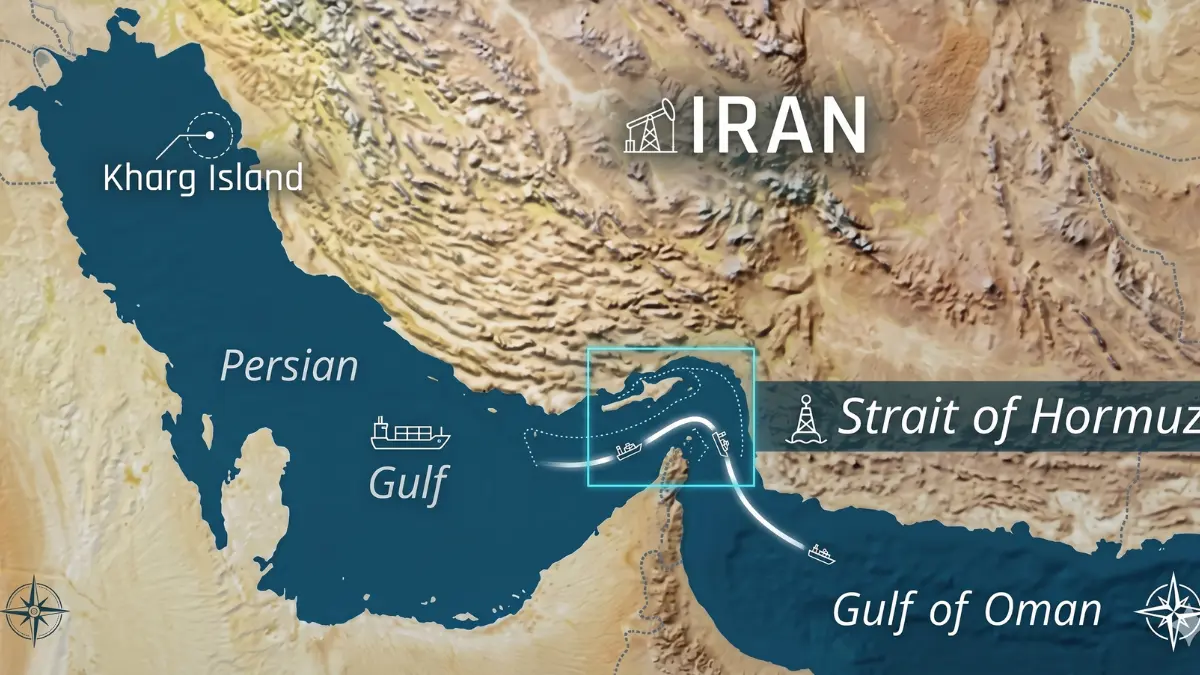
Think of the Strait of Hormuz not just as a shipping lane, but as a high-pressure valve. When Tehran puts a thumb on that valve, the cost of living in a Dallas suburb doesn’t just rise—it explodes. With the April 21 deadline for the ceasefire rapidly approaching, we are no longer just talking about the price of a gallon of gas. We are talking about the survival of the global supply chain as we know it.
The “Fragile Fortnight”: Why April 21 is the Only Date That Matters
To understand why Wall Street is currently a room full of people staring at their Bloomberg terminals in silence, you have to look at the fine print of the April 7 deal. Brokered under immense pressure, the ceasefire terms were razor-thin: a 14-day cessation of all hostile maritime activities in the Persian Gulf in exchange for a temporary easing of secondary sanctions on Iranian petrochemicals.
However, the underlying friction is still white-hot. Iran continues to demand a total withdrawal of the U.S. Fifth Fleet from the region. Meanwhile, the U.S. maintains that “freedom of navigation” is a non-negotiable red line. This stalemate has created a “waiting room” atmosphere in the boardrooms of the Fortune 500.
While a massive backlog of tankers has begun to move, the logistical scars are deep. Underwriters at Lloyd’s of London have signaled that if the ceasefire isn’t extended past April 21, maritime war risk premiums will make shipping through the Strait economically unfeasible. We are looking at a scenario where a ship’s insurance costs more than its cargo.
Chokepoint Economics: The Physical Reality of Your Net Worth
In the world of macroeconomics, we love to debate abstract concepts like “monetary policy” or “quantitative easing.” But Chokepoint Economics is visceral. It is the physics of trade. The Strait of Hormuz is only 21 miles wide at its narrowest point. Through this tiny gap passes 20% of the world’s daily oil consumption. According to the U.S. Energy Information Administration (EIA), the Strait remains the world’s most important oil transit chokepoint, making any disruption a global event.
If the Strait of Hormuz conflict 2026 escalates to a full closure, the “super-spike” predicted by Goldman Sachs—a move toward $200 per barrel—becomes a mathematical certainty rather than a bearish fantasy.
The Chokepoint Multiplier
When energy costs spike at the source, the “Chokepoint Multiplier” ripples through the economy:
- Logistics: Shipping a container from Shanghai to Long Beach doesn’t just get slower; it gets 3x more expensive overnight.
- Manufacturing: From Tesla’s Gigafactory in Texas to small-scale CNC shops in Ohio, the cost of “turning the lights on” becomes a line item that can erase annual profits in a single quarter.
- The Digital AI Tax: Data centers, the iron of the AI revolution, are massive energy sinks. Surging electricity bills are the invisible tax on every “Vibe Coder” and tech startup in America.
A Shadow from the Past: Lessons from the 1980s Tanker War
To understand where we are going, we have to look at where we’ve been. In 1984, the “Tanker War” phase of the Iran-Iraq conflict saw over 500 vessels attacked. Back then, the world was less “just-in-time.” Today, we are hyper-connected and far more fragile.
In the 80s, logistics were handled by radio and gut instinct. In 2026, we have Starlink shipping logistics and real-time satellite monitoring. Paradoxically, this transparency makes the market more volatile. During the Tanker War, news of an attack took hours or days to hit the floor; today, an Iranian drone video hits X (formerly Twitter) in seconds, triggering algorithmic sell-offs before the oil even hits the water.
The lesson from history is that these conflicts are rarely “one and done.” They simmer. They involve “grey zone” warfare—mines, “accidental” collisions, and cyber-attacks on port infrastructure. The 2026 conflict is the 1980s on digital steroids.
The Fertilizer Crisis: Why Your Grocery Bill is the Real War Zone
While the media is obsessed with the “price at the pump,” a far more insidious threat is brewing for the American heartland. The Strait of Hormuz is not just an oil exit; it is a fertilizer exit. Approximately 50% of the world’s global urea exports originate from the Persian Gulf.
Nitrogen-based fertilizer is the literal fuel for modern industrial agriculture. Without it, crop yields plummet. Farmers in Iowa and Nebraska are already seeing a 40% increase in fertilizer costs compared to Q1 2025. This is the “Silent Crisis.”
If the Strait of Hormuz conflict 2026 resumes, we aren’t just looking at expensive gas; we are looking at a potential “harvest failure” in 2027. This isn’t hyperbole—it’s chemistry. Policy researchers at the Department of Agriculture are currently working in a state of high alert, knowing that a prolonged blockage means empty shelves in the produce aisle and a total restructuring of U.S. food security. Organizations like the World Bank have repeatedly warned that energy shocks and fertilizer shortages are the primary drivers of global food insecurity.
The “Petrodollar 2.0” Debate: Is the Dollar Losing Its Oil Grip?
One of the most profound shifts in 2026 is the acceleration of the “Petrodollar 2.0” movement. For decades, the U.S. Dollar’s status as the global reserve currency was anchored by the fact that oil was priced in Greenbacks. But as the conflict in the Strait has intensified, the BRICS+ bloc has seized the opportunity to push for non-dollar settlements.
We are seeing “Oil-Yuan” and “Oil-Rupee” trades move from experimental to mainstream. If the Strait is blocked, and the U.S. is forced to tap the Strategic Petroleum Reserve while simultaneously fighting a currency war, the structural integrity of the Dollar Index (DXY) will be tested like never before. This is a geopolitical move to decouple the global energy trade from Washington’s influence, and the Strait of Hormuz is the primary lever being used to pry that grip loose.
Safe Haven Rotations: The Johny Millionaire Volatility Triangle
As we approach the April 21 deadline, “Smart Money” is no longer just buying “the dip.” They are repositioning into what we call the Johny Millionaire Volatility Triangle: a proprietary framework for wealth preservation in high-conflict eras.
1. Hard Assets (The Anchor)
Spot gold has surged past $2,500 an ounce. Central banks aren’t just buying gold; they are repatriating it. In a world where a maritime chokepoint can freeze your digital assets, “the yellow metal” provides a physical floor to a portfolio.
2. Digital Gold (The Mobile Hedge)
Bitcoin has finally begun to decouple from the Nasdaq. In 2026, many high-net-worth individuals view Bitcoin not as a speculative play, but as a “portable exit.” If traditional banking rails are stressed by energy-induced bank runs, Bitcoin’s 24/7 liquidity becomes an Asymmetric Hedge.
3. Tactical Cash (The Opportunistic Leg)
Contrary to the “cash is trash” mantra, the third leg of the triangle is high-yield liquidity. When the ceasefire ends and the market realizes the “Fragile Fortnight” is over, there will be a massive “Risk-Off” liquidation. Having dry powder allows you to buy distressed assets—whether they be real estate or tech stocks—when the panic hits its peak.
The Fed’s Impossible Choice: Energy-Induced Stagflation
The Strait of Hormuz conflict 2026 has essentially painted Jerome Powell and the FOMC into a corner with no exit. Usually, when a geopolitical crisis slows growth, the Fed cuts rates to stimulate the economy. But you can’t “print” more oil.
If the Fed cuts rates to save the housing market, they fuel the fire of oil-induced inflation. If they raise rates to kill inflation, they bankrupt the very businesses trying to transition to more efficient energy models. It’s a “Volcker Moment” on steroids. The market is currently pricing in a “wait and see” approach, but a collapse of the ceasefire on April 21 will force the Fed to pivot toward a “Wartime Economy” stance, prioritizing the stability of the financial system over the price of consumer goods.
Real-World Impact: The Texas Permian vs. The Midwest
The conflict isn’t affecting everyone equally. Let’s look at the State-Level Impact Profiles:
Texas: The Permian Reaction
In the Permian Basin, the conflict is a double-edged sword. While $150 oil sounds like a windfall, the “maritime war risk” makes exporting that oil a nightmare. We are seeing a massive shift toward domestic refining and a surge in investment for pipelines that bypass the Gulf of Mexico entirely. Texas is essentially trying to “fortress” its energy economy.
The Midwest: The Fertilizer Drought
Meanwhile, in the Midwest, the mood is grim. The reliance on the fertilizer pipeline through the Strait of Hormuz has turned the 2026 planting season into a high-stakes gamble. We are seeing a sudden interest in “Regenerative Ag-Tech”—startups that help farmers reduce their dependence on synthetic nitrogen. For these businesses, the conflict is the ultimate “Push Factor” for innovation.
[Read more on Johny Millionaire: What It Takes to Build a $1B Company in America Today]
Investor Psychology: How to Think in 48-Hour News Cycles
Managing a seven-figure or eight-figure portfolio during a Strait of Hormuz conflict 2026 scenario requires a total psychological overhaul. Most investors are reactive. They wait for the “Breaking News” alert on their phone to make a move.
The “Johny Millionaire” mindset is different. You must think in “Event-Based Probabilities.”
- If the Ceasefire Extends: The market rallies 5%, oil stays at $100. Action: Trim the hedges.
- If a “Minor” Incident Occurs: A tanker is harassed but not seized. Action: Hold the line.
- If the Ceasefire Fails (The April 21 Cliff): Total blockade. Action: Deploy the Volatility Triangle.
The goal isn’t to be right about the politics; it’s to be positioned for the physics.
A Silver Lining? The Acceleration of U.S. Energy Independence
Is there a contrarian play here? Absolutely. Historically, energy shocks are the greatest catalysts for infrastructure shifts. The $150 oil of 2026 is doing more for U.S. energy independence than a decade of policy could.
We are seeing a massive “re-shoring” of the solar supply chain and a renewed push for Small Modular Reactors (SMRs). For the domestic tech investor, the “Hormuz Hedge” isn’t just about avoiding oil; it’s about betting on the companies that will make the Strait of Hormuz irrelevant to the American power grid by 2030.
Glossary of Terms: Navigating the 2026 Crisis
- Chokepoint Economics: The study of how narrow maritime passages control global commodity pricing.
- Urea Exports: The primary component of nitrogen fertilizer; critical for global food supply.
- Asymmetric Risk: A situation where the potential downside is significantly greater (or smaller) than the potential upside.
- Maritimes War Risk Premium: The extra insurance cost added to ships traveling through high-conflict zones.
- Petrodollar 2.0: The movement by non-Western nations to trade oil in currencies other than the U.S. Dollar.
Key Takeaways for the Strategic Investor
- April 21 is the “Vegas Line”: Treat this date as the ultimate pivot point for your Q2 strategy.
- Diversify Geopolitically: It’s not just about what you own, but where your “inputs” come from.
- Watch the Fertilizer, Not Just the Oil: Food inflation is stickier and more politically explosive than gas prices.
- The Volatility Triangle is Mandatory: Gold, Bitcoin, and tactical cash are your three best friends in a “Fragile Fortnight.”
Conclusion: The New Era of Geopolitical Business
The Strait of Hormuz conflict 2026 is the final nail in the coffin of the “Peace Dividend” era. We are moving into a world where business success is inextricably linked to geopolitical literacy.
The next few days will determine the trajectory of the U.S. economy for the next five years. Whether we see a return to stability or a plunge into $150 oil depends on the diplomatic skill of world leaders and the underlying hunger for a global reset. For the millionaire-minded, this isn’t a time for panic—it’s a time for strategic positioning. History shows that chokepoints can either be points of failure or points of transformation. Ensure your “ship” is prepared for whichever tide comes in on April 21.
FAQ Section
Q: Why does the Strait of Hormuz affect my local business if I don’t use much oil?
A: Because of the “Chokepoint Multiplier.” High energy prices increase the cost of shipping, plastics, packaging, and food. Even a service-based business feels the pinch when their customers have less discretionary income due to $6 gas.
Q: Is the U.S. Strategic Petroleum Reserve (SPR) enough to stop the price spike?
A: The SPR can provide a temporary buffer (30–60 days), but it cannot replace the 20 million barrels per day that pass through the Strait. It is a band-aid for a deep structural wound.
Q: How do I protect my portfolio from a total ceasefire collapse on April 21?
A: Move toward the “Volatility Triangle.” Increase your exposure to hard assets (Gold), maintain 20% tactical cash for “panic buys,” and ensure your equity holdings aren’t over-leveraged to high-energy logistics.


[…] Read More: The Strait of Hormuz Standoff: Why a Fragile Ceasefire is the Only Thing Standing Between $150 Oil a… […]
[…] Read more on Johny Millionaire: The Strait of Hormuz Standoff: Why a Fragile Ceasefire is the Only Thing Standing Between $150 Oil a… […]