


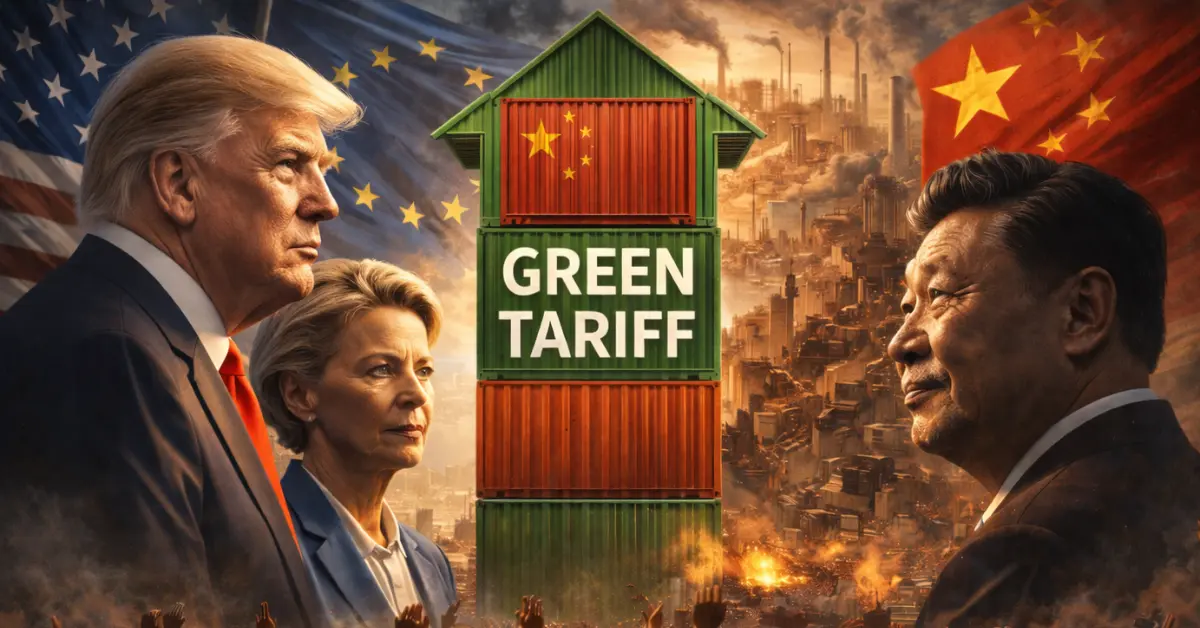
In a move that signals a tectonic shift in global trade policy, the United States and the European Union have jointly proposed the formation of a “Green Tariff” bloc. This strategic alliance aims to harmonize carbon-border taxes across the Atlantic, effectively erecting a formidable “trade wall” designed to neutralize the impact of China’s industrial overcapacity. The primary targets of this initiative are low-cost Chinese electric vehicles (EVs) and solar panels, which Western officials argue are benefiting from unfair state subsidies that distort global markets.
The proposal marks a high-water mark for transatlantic cooperation on climate and trade. By aligning their carbon accounting and import levies, Washington and Brussels intend to ensure that domestic manufacturers are not undercut by “carbon-intensive” or heavily subsidized foreign goods. Unsurprisingly, U.S. manufacturers of renewable energy components have been quick to cheer the announcement. Industry leaders contend that such protections are vital to safeguarding the thousands of domestic jobs created under the Inflation Reduction Act, arguing that without a level playing field, the multi-billion dollar transition to green energy remains at risk of foreign hollowing.
However, the diplomatic fallout was instantaneous. Beijing has issued a sharp rebuke, warning of “reciprocal measures” if the proposed tariffs are implemented. Chinese trade officials have signaled that they are prepared to target high-value U.S. agricultural exports—specifically soybeans and corn—as well as European luxury goods, ranging from French fashion to German automobiles. Market analysts warn that this could quickly devolve into a multi-front trade war, complicating global supply chains already under strain from geopolitical tensions.
For investors, the formation of this bloc introduces a new layer of complexity. While it provides a protective moat for Western green-tech firms, it also threatens to increase the cost of decarbonization by limiting access to China’s efficient, high-volume production lines. As the U.S. and EU move toward a formal treaty, the world’s two largest economies appear headed for a protracted period of “green protectionism.” The coming months will be critical as negotiators attempt to balance the urgent need for a climate transition with the protection of core industrial interests.