


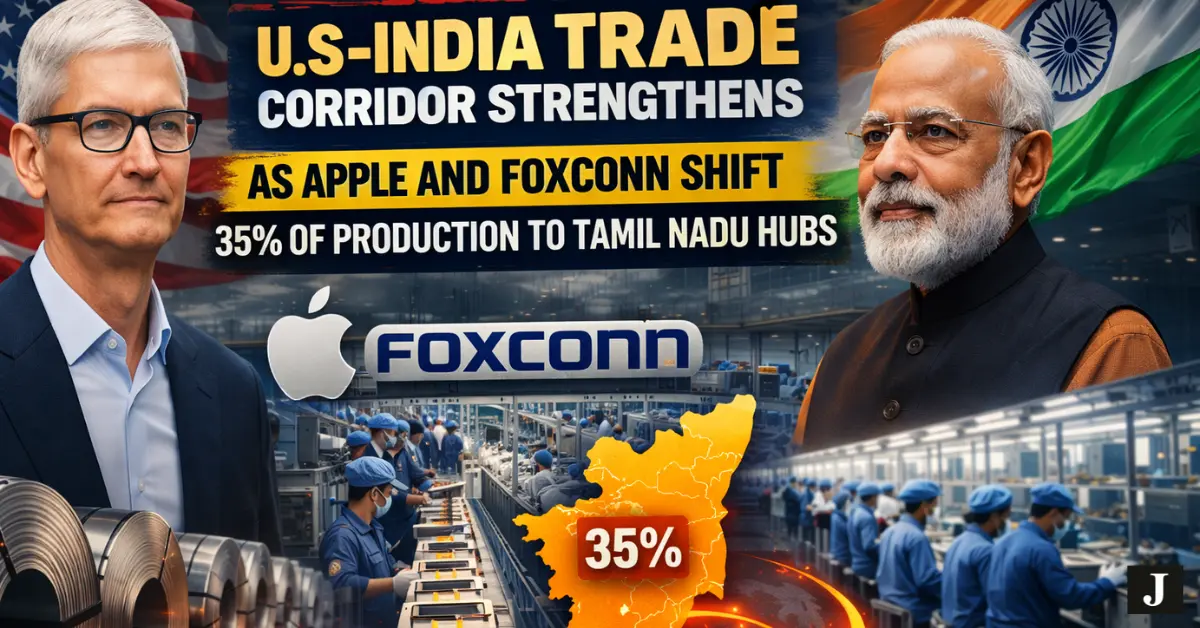
The geopolitical map of global technology manufacturing is being redrawn as the U.S.-India trade corridor reaches a historic milestone. In a definitive move to de-risk supply chains, Apple and its primary manufacturing partner, Foxconn, have officially transitioned 35% of their total iPhone production capacity to specialized industrial hubs in Tamil Nadu, India. This shift represents the most significant migration of high-tech manufacturing out of East Asia in the last decade.
The expansion in Tamil Nadu is not merely a relocation of assembly lines; it is the cornerstone of a sophisticated “China Plus One” strategy that has been gaining momentum since 2023. By deepening their footprint in southern India, Apple and Foxconn are tapping into a rapidly maturing ecosystem of local component suppliers and a skilled workforce that is increasingly competitive on a global scale. This move aligns with the Indian government’s “Make in India” initiative, which offers lucrative production-linked incentives to electronics manufacturers.
For American investors and market analysts, this pivot is a masterclass in supply chain resilience. The diversification significantly mitigates exposure to regional trade tensions and logistical bottlenecks that have historically plagued the tech sector. Furthermore, the U.S.-India trade corridor is benefiting from increased bilateral cooperation on critical and emerging technologies. According to recent reports from the U.S. Department of State, diplomatic efforts to synchronize trade standards have paved the way for these multi-billion dollar private sector investments.
Industry experts note that Tamil Nadu has emerged as the “Detroit of South Asia” for electronics, boasting infrastructure that now rivals traditional hubs like Zhengzhou. The local government’s proactive stance on labor laws and land acquisition has been instrumental in facilitating Foxconn’s rapid facility expansions. As highlighted by analysis from Bloomberg Intelligence, the integration of Indian manufacturing into the global value chain could potentially add 1.5% to India’s GDP growth over the next three years.
Looking ahead, this 35% shift is likely just the beginning. As Apple explores manufacturing other flagship products like iPads and MacBooks in India, the trade corridor between Washington and New Delhi is set to become the most vital artery in the global electronics industry. The conclusion is clear: the era of single-source manufacturing is ending, replaced by a more balanced, resilient, and Indo-Pacific-centric production model.
Read More: Why the AI Data Center Boom is a Real Estate Gold Mine