


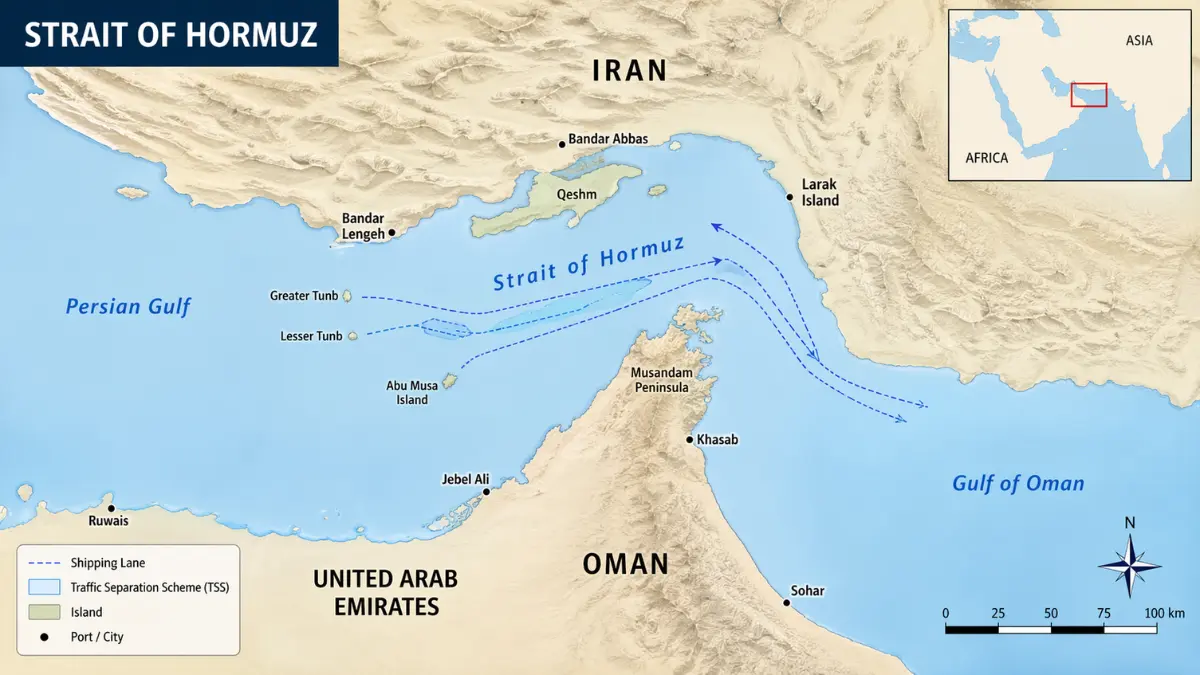
LONDON — The global energy landscape underwent a dramatic recalibration this week as the looming threat of a Middle Eastern energy blockade evaporated. Following an official announcement from Tehran on April 18 that the Strait of Hormuz would remain open for international commerce, North Sea Brent crude futures plummeted by 8.4%, marking the sharpest single-day decline in eighteen months. This “de-escalation rally” has quickly become the dominant macroeconomic narrative, providing a much-needed reprieve for inflation-weary central banks and sparking a renewed appetite for risk across global equities.
The Great Easing: Oil and Logistics
The reopening of the world’s most critical maritime artery—through which roughly 21% of global petroleum consumption passes—has triggered an immediate domino effect in logistics. For the first time in four years, U.S. oil cargoes moving through the Panama Canal have hit a record high, as Gulf Coast exporters pivot to meet Asian demand without the “war-risk” premiums that had previously paralyzed shipping lanes.
Data from the Energy Information Administration (EIA) indicates that the cost of insuring a standard VLCC (Very Large Crude Carrier) transit has dropped from $1.2 million to under $400,000 in just seven days. This sudden surplus in supply is expected to translate to a $0.45 per gallon drop at American pumps by the mid-May travel season.
Macro Reaction: From the IMF to Bitcoin
The timing of the de-escalation coincides with the spring meetings of the IMF and World Bank, where officials had previously warned of a “serious threat” to the 3.2% global GDP growth forecast. While the initial tone was somber, the subsequent collapse in energy prices has shifted the focus toward a “soft landing.”
Intriguingly, the relief rally extended beyond traditional markets. Bitcoin surged to a two-month high of $74,200, reinforcing its emerging status as a barometer for global liquidity. Analysts suggest that as the “inflation hedge” requirement for oil eased, capital rotated back into high-growth digital assets, fueled by the expectation that lower energy costs will give the Federal Reserve more room to consider interest rate cuts in the second half of 2026.
The Winners: A “Low-Oil” Environment
The shift into a low-oil regime is creating distinct winners across the S&P 500. Airlines and Freight sectors are leading the pack; shares of Delta and FedEx rose 6.2% and 4.8% respectively, as fuel—their largest variable expense—becomes significantly cheaper. Retailers are also seeing a boost in pre-market trading, as lower gas prices effectively act as a “consumer tax cut,” increasing discretionary spending power.
What Comes Next
Investors should keep a close eye on the upcoming OPEC+ ministerial meeting. With prices crashing, there is a high probability of a “snap-back” production cut to defend the $80-per-barrel floor. Furthermore, while the Strait is open today, the underlying geopolitical friction remains. For founders and supply chain managers, the lesson of the 2026 energy shock is clear: diversification of transit routes is no longer optional—it is a prerequisite for survival in a multipolar world.