


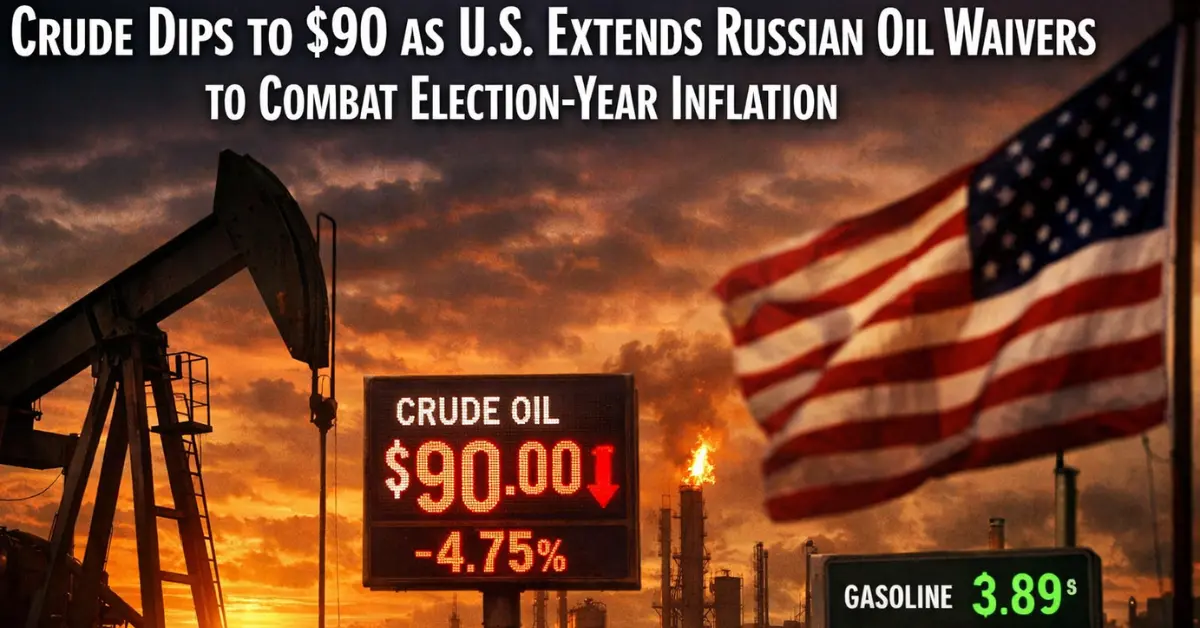
Global energy markets experienced a notable shift today as crude oil prices retreated to the $90-per-barrel mark. The move follows a decisive announcement from the U.S. Treasury Department to extend sanctions waivers on Russian oil, a strategic maneuver aimed at stabilizing domestic energy costs ahead of the 2026 midterm elections.
The extension, now being dubbed the “Bessent Waiver” after Treasury Secretary Scott Bessent, has sparked an immediate debate among market analysts. Proponents argue the move is a stroke of strategic genius, decoupling global supply needs from geopolitical tensions to prevent a localized price shock. Critics, however, view it as a blunt political necessity—a transparent effort to shield the administration from the inflationary pressures that traditionally haunt incumbents during election cycles.
The stabilization of oil at $90 creates a complex 2026 U.S. investment climate. While lower energy costs provide a tailwind for consumer discretionary stocks and transportation giants, they act as a double-edged sword for the domestic energy sector. Specifically, the U.S. shale patch is seeing a divergence between “winners and losers.” High-efficiency operators in the Permian Basin, who have lowered their breakeven points through automation, remain profitable. Conversely, smaller independent drillers with higher debt loads may find the $90 ceiling restrictive for aggressive capital expenditure.
Compounding the bearish pressure on prices is the successful reopening of the Strait of Hormuz. Following months of diplomatic friction, the resumption of normalized traffic through this critical chokepoint has restored the flow of millions of barrels of crude per day. This logistics breakthrough, as reported by Bloomberg Energy, has significantly reduced the “fear premium” that had kept prices hovering near triple digits earlier this year.Looking forward, the extension of these waivers suggests that the U.S. is prioritizing “energy pragmatism” over strict geopolitical isolationism for the remainder of the fiscal year. For investors, the focus now shifts to the U.S. Energy Information Administration (EIA) inventory reports to see if domestic production can offset the cooling demand seen in cooling manufacturing sectors. While $90 crude offers a temporary reprieve for the American consumer, the long-term sustainability of this price floor depends entirely on the fragile balance between White House policy and Middle Eastern stability.