


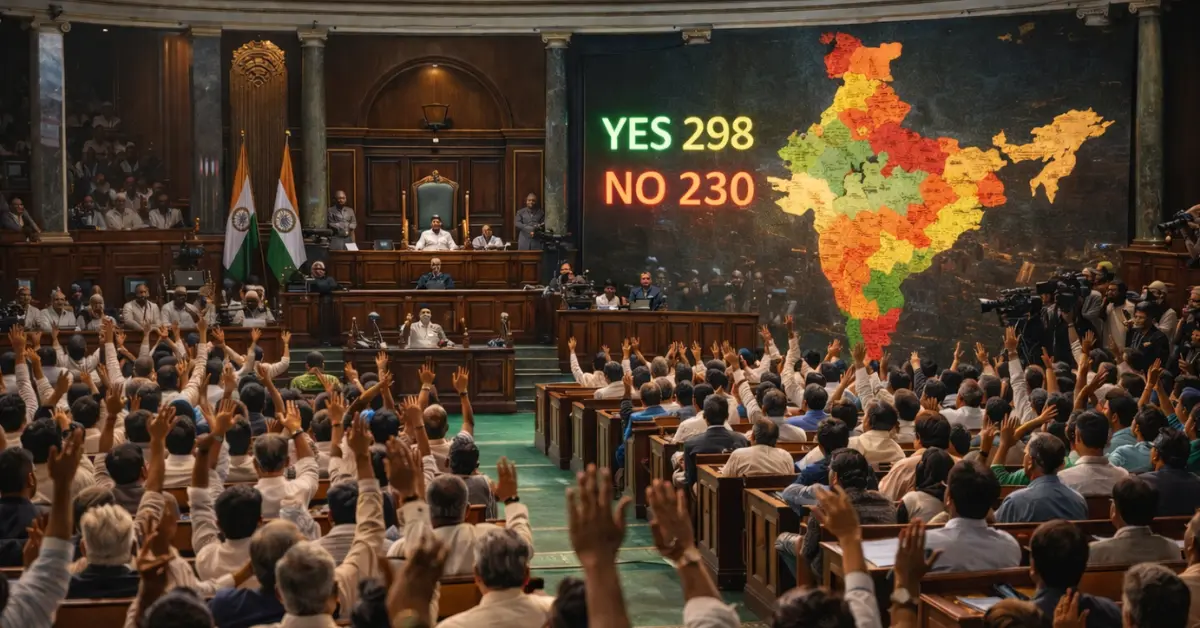
India’s Parliament has concluded an intense special session by passing the “Constitution (131st Amendment) Bill,” a monumental piece of legislation designed to redraft the nation’s electoral boundaries for 2026. This move, spearheaded by Prime Minister Narendra Modi’s government, marks the beginning of the first major delimitation exercise in decades. By significantly expanding the number of seats in the Lok Sabha—the lower house of Parliament—the bill aims to align political representation with India’s current demographic reality.
While the government frames the expansion as a necessary step for democratic proportionality, the move has ignited a firestorm of opposition from India’s southern states. Leaders in regions like Tamil Nadu, Kerala, and Karnataka argue that the population-based delimitation process unfairly penalizes states that successfully implemented family planning and education initiatives over the last fifty years. Because population growth has been much higher in the northern “Hindi heartland,” southern critics fear a permanent dilution of their political influence and a subsequent shift in federal resource allocation toward the north.
For global investors, the significance of this domestic friction cannot be overstated. India currently holds the title of the world’s fastest-growing major economy, according to data from the International Monetary Fund, making its internal political landscape a matter of international fiscal interest. The “India Story” has largely been built on a foundation of reform and relative political stability. However, analysts warn that if the government fails to manage this burgeoning north-south divide, the resulting regional friction could complicate nationwide policy implementation and labor mobility.
The business community is closely watching how New Delhi balances these competing interests. The government’s ability to offer concessions—perhaps through revised fiscal sharing formulas—will be a key indicator of long-term stability. As the world’s most populous nation moves toward this historic electoral restructuring, the challenge will be ensuring that economic momentum is not derailed by internal constitutional crises. For now, the landmark bill stands as a testament to India’s evolving democracy, even as it highlights the delicate regional balances that sustain it.